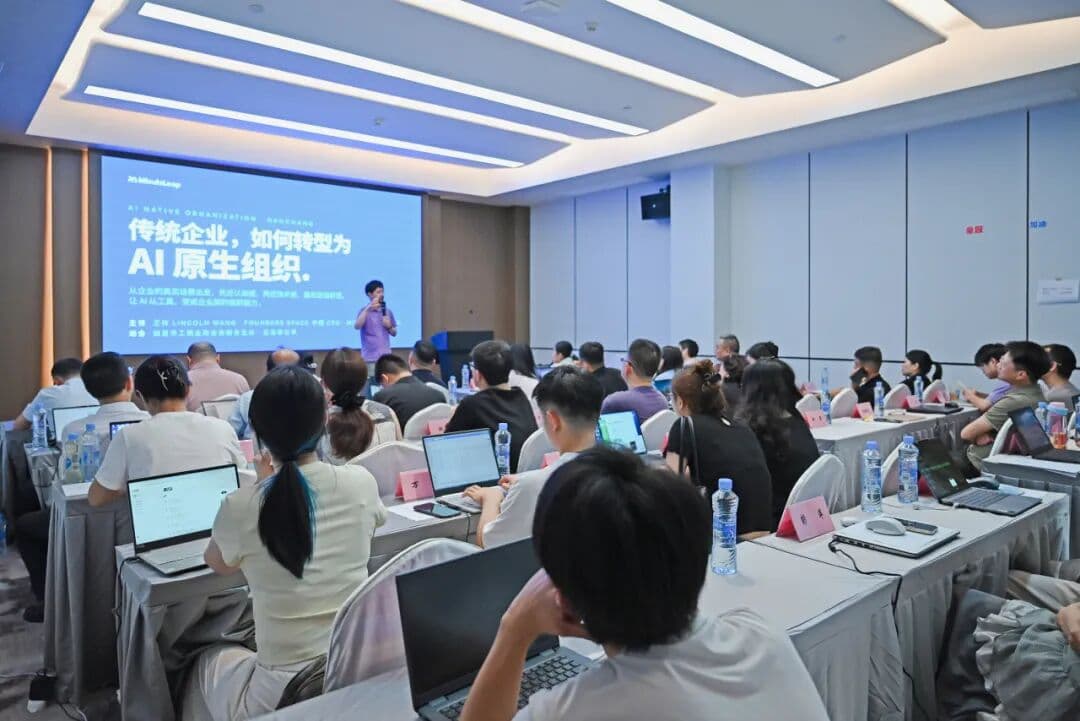
August 17, 2026 | Nanchang, Jiangxi · AI Digital Employee Bootcamp
On August 17, 2026, the Nanchang High-Tech Zone Federation of Industry and Commerce and Entrepreneurs Association organized an AI Digital Employee Bootcamp to help local companies explore AI use cases, improve operating efficiency, and accelerate digital transformation. MindsLeap founder Lincoln Wang was invited as the hands-on instructor, leading more than 40 entrepreneurs and company representatives through enterprise AI transformation, AI-native organization building, and practical digital employee implementation.
According to the official report from the Nanchang High-Tech Zone Entrepreneurs Association, Qin Guifang, Chair of the Nanchang Federation of Industry and Commerce, and Liu Wenyang, Chair of the High-Tech Zone Federation of Industry and Commerce, also attended the program. The bootcamp combined conceptual briefing, onsite practice, and outcome sharing, moving AI from a trend topic into concrete business scenarios.
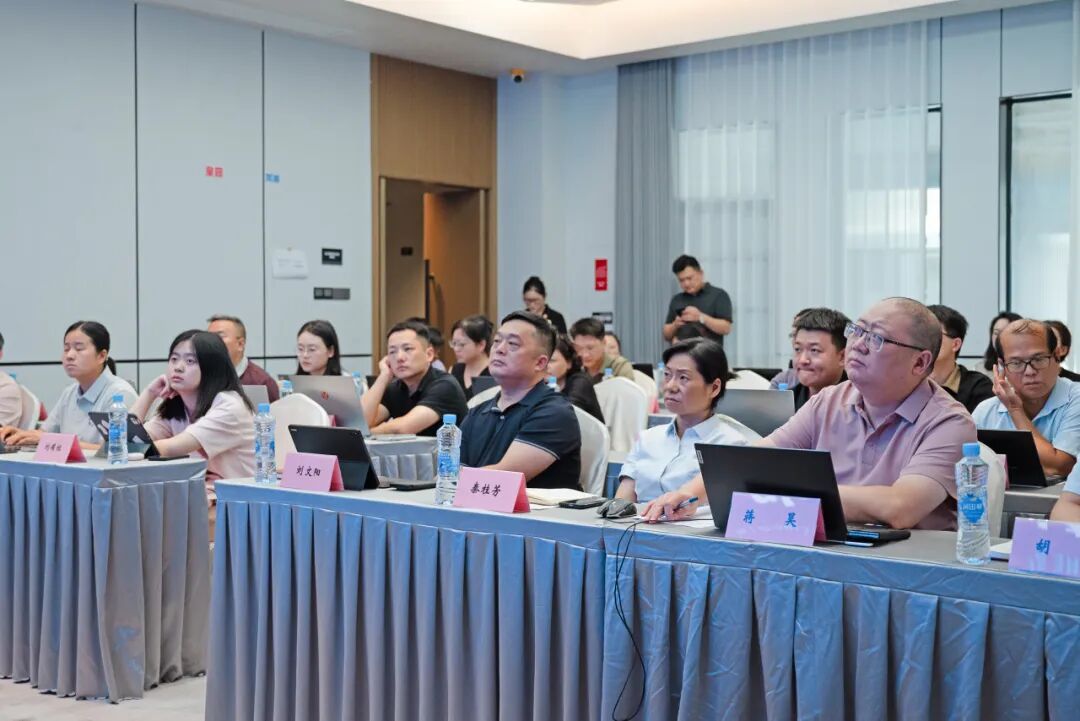
From Using AI Tools to Designing AI Employees
AI is quickly entering multiple layers of business operations. For many companies, the hardest part is no longer recognizing that AI matters. The harder question is how to find the first use case that can run, be verified, and keep improving.
Lincoln opened with a practical idea: AI should become a real employee inside the organization. He focused on two themes:
- How traditional companies can transform into AI-native organizations
- How to build a one-person marketing team with AI
His core point was that enterprise AI transformation cannot stop at individual employees learning a few AI tools. The real shift begins when companies manage AI through roles, workflows, and acceptance standards. AI should not remain a chat interface. It should become a digital employee that can read context, use tools, execute tasks, and review results.
This is also the direction MindsLeap has continued to emphasize: enterprise AI implementation is moving from individual productivity to organizational capability. Companies that connect goals, workflows, data, permissions, and review standards earlier will be better positioned to turn AI into reusable business capability.
One-Person Marketing Team as the First Training Ground
During the bootcamp, Lincoln unpacked the method behind the one-person marketing team. The idea is not that one person does all marketing work alone. It is that one person leads a team of AI digital employees across market intelligence, content planning, asset production, channel publishing, and review.
Marketing is a strong starting point for digital employees because it is frequent, visible, rich in source material, fast in feedback, and naturally spread across multiple tools and platforms. A company can begin by breaking the marketing workflow into several digital employee roles:
- Market intelligence analyst: tracks trends, competitors, customer feedback, and AI search responses
- Content planner: turns events, cases, product materials, and expert views into content topics
- Asset producer: creates copy, short-video scripts, subtitles, titles, and cover briefs
- Channel publisher: adapts the same content for the website, WeChat, video platforms, communities, and email
- Review analyst: collects performance data and writes lessons back into the workflow
The key is not to write more prompts. It is to turn business work into a trainable, reviewable, and improvable role system. A prompt solves one task; a skill solves one type of task; a digital employee runs and improves a business workflow over time.
Building the First AI Digital Employee Onsite
The bootcamp was designed not only for listening, but for hands-on practice. Participating companies worked with their own business needs and built their first AI digital employee onsite, defining its role, workflow, and task execution process.
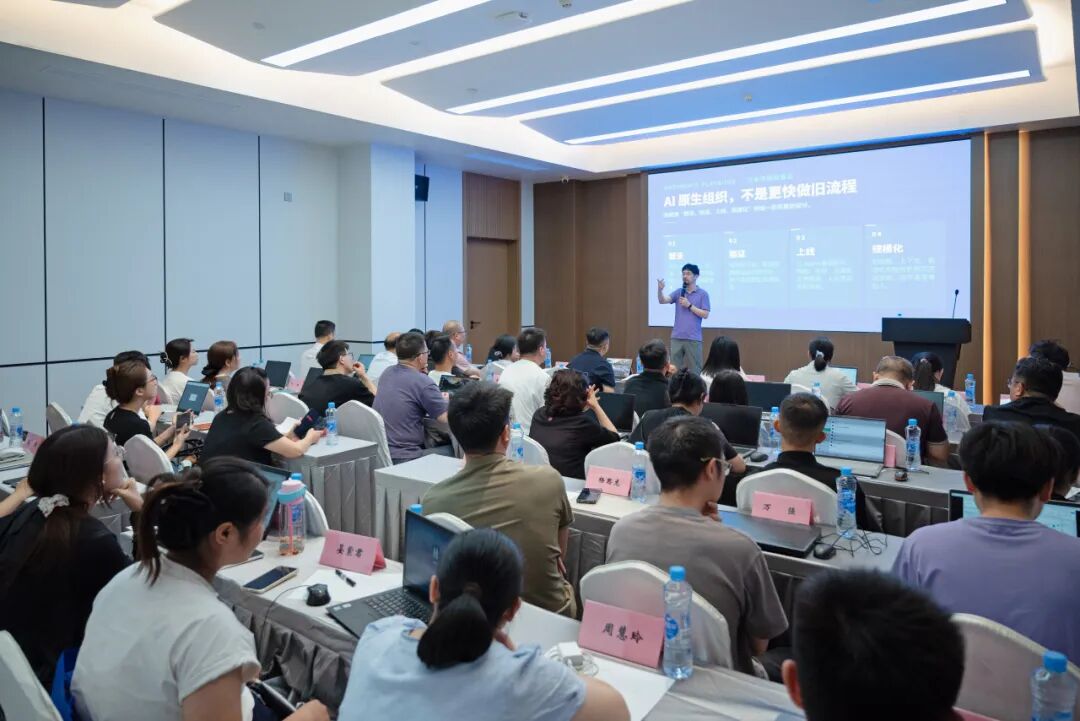
This required entrepreneurs to answer several concrete questions:
- Which role or business goal does this digital employee serve?
- What materials, data, and context does it need to read?
- What output should it deliver each time?
- What counts as acceptable output, and when must a human take over?
- How will it improve from real usage feedback?
These questions may look basic, but they decide whether AI can move from tool demos into real business. Only when role responsibility, process boundaries, data inputs, and acceptance standards are clear can a digital employee deliver consistently instead of remaining a one-off experiment.
Practical AI Transformation for Private Enterprises
For private enterprises, AI transformation does not have to begin with a massive system overhaul. A more practical path is to start from one frequent, verifiable scenario with clear business results, run a lightweight AI workflow, and then expand gradually into more departments and roles.
That is the value of this AI Digital Employee Bootcamp in Nanchang High-Tech Zone. It helped companies move from having heard about AI to actually using it. Entrepreneurs saw that AI is not only a content generation tool. It can become a new type of collaborator inside the organization: one that needs a role definition, context, permissions, review standards, and continuous training through use.
This is consistent with MindsLeap's broader enterprise AI transformation approach: begin with shared awareness, build a common language through practical workshops, and then embed AI into real business workflows through digital employees, the entrepreneur's second brain, and FDE implementation.
Final Thoughts
An AI digital employee is not just a more exciting name for a tool. It is a new way to design organizations.
When companies begin asking which parts of work AI can take on, which workflows should be decomposed, and which data and experience should become reusable context for AI, transformation stops being only a technology initiative. It becomes part of operating capability.
MindsLeap will continue working with entrepreneur organizations, industrial parks, and innovation institutions to bring AI-native organization building, digital employee training, and FDE implementation methods into more business settings, helping companies move from AI awareness to measurable business outcomes.
About MindsLeap
MindsLeap is an enterprise AI transformation and AI-native startup acceleration platform. Through the MindsLeap Founders AI Club, AI training and strategic advisory, FDE implementation, startup acceleration, and global growth services, MindsLeap helps traditional enterprises embed AI into real business workflows and helps AI-native ventures connect with industry use cases and global markets. MindsLeap is a global partner of Founders Space.
This article was translated and adapted from the Chinese original with AI assistance.