Author: Lincoln Wang | Founder of MindsLeap | Global Partner at Founders Space | Founder of Founders AI Club
If you give every employee an AI, does the company automatically get smarter?
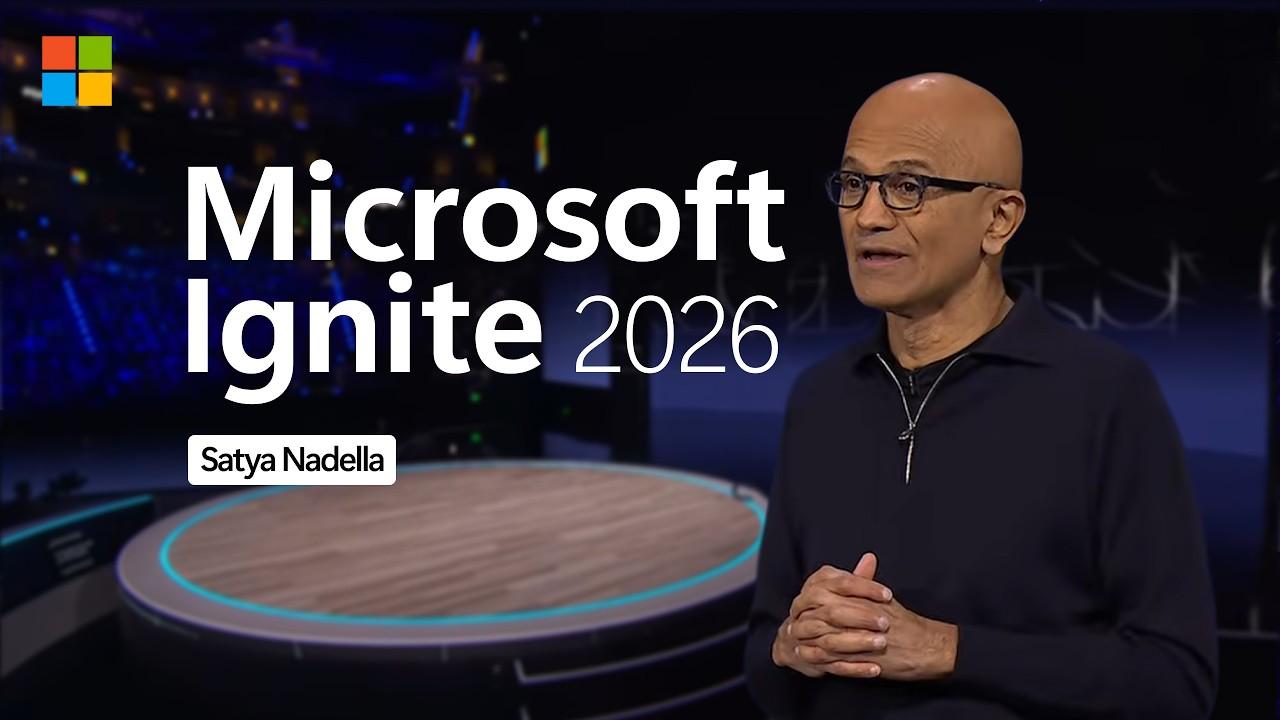
On November 17, 2026, Microsoft CEO Satya Nadella pushed this question one step further in his Ignite keynote. Talking about Microsoft IQ, he argued that enterprises need to:
"Build, retain, and continuously improve their own intelligence."
The word that deserves attention is "own." Models can be purchased and software can be subscribed to — but can a company's experience, judgment, and ways of working together actually accumulate as people use AI, becoming the starting point for the next piece of work? That is a far more long-term question than buying a few more seats.
Employees Get Faster — the Company Doesn't Necessarily Learn
Picture a sales team. One person uses AI to draft proposals, another organizes customer requirements, and someone else turns the pricing sheet into an auto-calculating tool. Individually, everyone is faster than before. But when a colleague takes over an account, they still have to ask from scratch: why did the client reject the last proposal, which promises must never be made casually, which discounts require fresh approval?
This is a business-scenario illustration, not a Microsoft customer case. Yet it points to a crucial distinction: individual productivity gains can happen inside a private conversation; organizational capability only forms when others can build on the results of that work.
A polished proposal is a deliverable. A verified, situation-aware set of judgments can become an organizational asset. If AI has to learn the company from zero every single time, we have merely made repetitive work a little faster — without reducing the cost of re-explaining everything the next time around.
What a Company Needs to Keep Is More Than Files
Nadella described Microsoft IQ as a platform for enterprises to continuously build and control their own intelligence. He also said that work will evolve from individuals collaborating with AI toward multiple people and their agents working together around shared goals — the key being:
"Shared context."
Translated into business language: people cannot each carry their own version of the background, believe they are aligned, and assume they are working on the same thing. To me, this is the most valuable part of the keynote for business leaders: the conversation is shifting from what one assistant can do, to how an organization gets things done together.
Take quoting again. A contract template tells AI what a document should look like, and historical orders tell it what was sold — but neither explains why a lower margin was accepted at the time. Was it to enter a new industry, or because the delivery scope was different? Without those conditions, history can be mistaken for today's rules.
Organizational memory, therefore, is not just putting materials somewhere searchable. It also means preserving the reasoning behind decisions, their applicable conditions, and who is accountable — so experience can be reused and, when wrong, corrected.
Don't Make Every Agent Re-Onboard
Microsoft's product notes for Microsoft IQ point to a concrete direction: organizing governed business context, skills, and authoritative sources into reusable business plug-ins that different agents inherit — instead of being configured one by one.
The analogy that comes to mind is onboarding a new employee. An experienced team doesn't just send a newcomer a link to the shared drive and say "figure it out yourself." They explain the goal of the business, which rules cannot be broken, and who to escalate to when exceptions arise.
The same applies to AI agents. Feeding them a pile of files does not teach them how to work at this company. If sales, delivery, and finance each maintain conflicting instructions, plugging in a better model just makes three contradictory stories more fluent.
The change I value most is that business owners now have a real reason to codify tacit experience — not to write a manual nobody reads, but because this experience directly shapes the next quote, delivery, or customer response.
Remembering More Can Also Mean Being Wrong Longer
But an organization with memory does not automatically have judgment. A policy that has quietly expired, if steadily reused by a system, can do far more damage than a one-off wrong answer.
Imagine a special refund granted to one customer is recorded. Next time a similar case comes up, the system needs to know that was an approved exception — not a new policy for all customers. Who approved it, when it expires, and when re-approval is needed matter as much as the refund amount itself.
That is why I disagree with equating "upload more materials" with "building a corporate brain." Knowledge must have provenance, rules must have boundaries, and expired content must be able to exit. The value of organizational intelligence is not remembering everything, but reliably calling on trusted experience at the right moment.
Microsoft's own notes also distinguish maturity levels: some capabilities are generally available, while memory and parts of the approval governance remain in preview. A reminder that the direction shown on stage and the production system an enterprise can stably rely on today are not the same thing.
Leave Each Improvement for the Next Piece of Work
For business leaders, I prefer a single diagnostic question: for the same piece of work done again next month, how many times does the company still have to re-explain itself?
If a project retrospective corrects an assumption but only the people in the room know, the improvement stays in human memory. If it can update the relevant working rules after confirmation, and the next execution cites the correct version, only then does the retrospective begin to change the organization's future behavior.
This doesn't mean buying a whole new platform first. Pick one recurring process and check whether it has clear inputs, traceable outcomes, and an owner who feeds errors back. Tools provide the vessel — but deciding what is worth keeping still requires people who understand the business.
My judgment: the more commodity the models become, the more enterprises need to deliberately manage the things that don't come with a subscription — the understanding of customers, verified experience, and the collaborative habits that turn judgment into action.
What Nadella laid out is Microsoft's product direction, not a result every enterprise has achieved. It deserves attention because it puts one question on the table: as everyone gets better at using AI, has the company itself actually learned more?
Cover: Microsoft's official Ignite keynote video. This article is based on the official keynote transcript and product documentation; business-scenario illustrations and the author's judgments do not represent Microsoft commitments.
About MindsLeap
MindsLeap is an AI-native organizational transformation accelerator. It helps traditional enterprises through AI transformation while also serving AI-native companies, OPCs, and tech founders — connecting industry scenarios, capital, Silicon Valley resources, and global markets.
MindsLeap is a global partner of Founders Space, the Silicon Valley innovation incubator. Through the Founders AI Club, AI training, AI consulting, FDE (Forward Deployed Engineer) deployment, and startup acceleration services, MindsLeap helps organizations move from AI awareness to real business implementation.
Around AI-native organization building, MindsLeap is assembling an ecosystem that connects founders, entrepreneurs, AI engineers, industry experts, investors, and global innovation resources — helping organizations embed AI into business processes, organizational capability, product innovation, and growth systems.
This article was translated and adapted from the Chinese original with AI assistance.