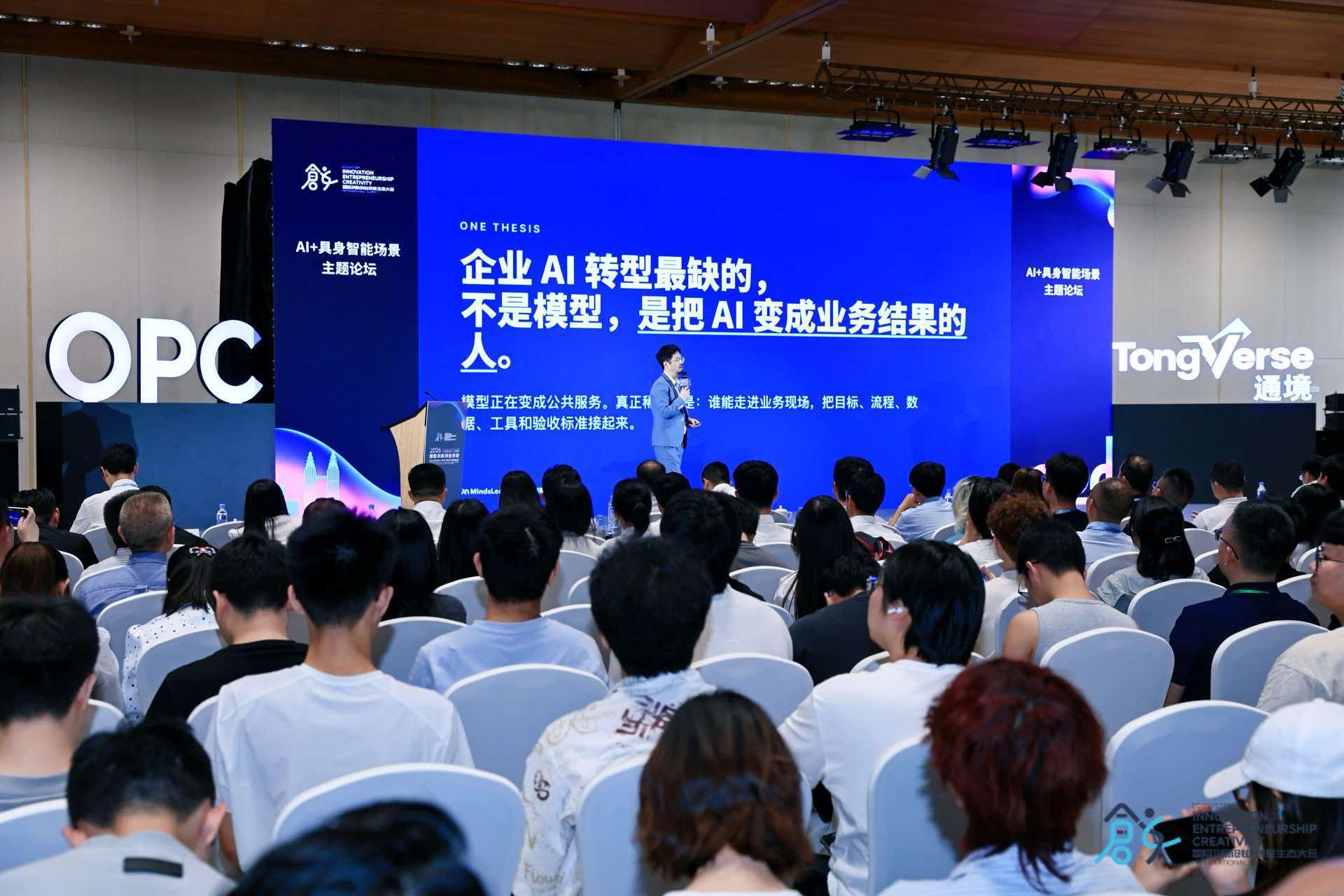
June 27, 2026 | Chongqing AI Bay International Conference Center
On June 27, 2026, the International Innovation, Entrepreneurship and Creativity Ecosystem Conference and the launch event of the General Artificial Intelligence "Mantianxing" Challenge opened at the Chongqing AI Bay International Conference Center. The conference focused on the new ecosystem of innovation, entrepreneurship, creativity, and AGI applications, bringing together guests from AI, embodied intelligence, digital content, cultural entertainment, and entrepreneurship.
Parallel forums explored scenarios including AI plus embodied intelligence, AI agents, AI plus film and television, and AI plus cultural entertainment. The event also showcased selected OPC innovation and entrepreneurship projects from across China. People's Daily Online Chongqing reported that the event aimed to strengthen Chongqing's AI industry ecosystem, attract global innovation talent, and accelerate digital industry development.
Lincoln Wang, Founder and CEO of MindsLeap and Partner and CEO of Founders Space China, was invited to speak at the conference. His keynote, Enterprise AI Transformation and OPC Opportunities, focused on a practical question:
As model capability becomes increasingly available as infrastructure, what capability is truly scarce?
Enterprise AI transformation is not short of models
Lincoln argued that the biggest bottleneck in enterprise AI transformation is not the model. It is the person who can turn AI into business outcomes.
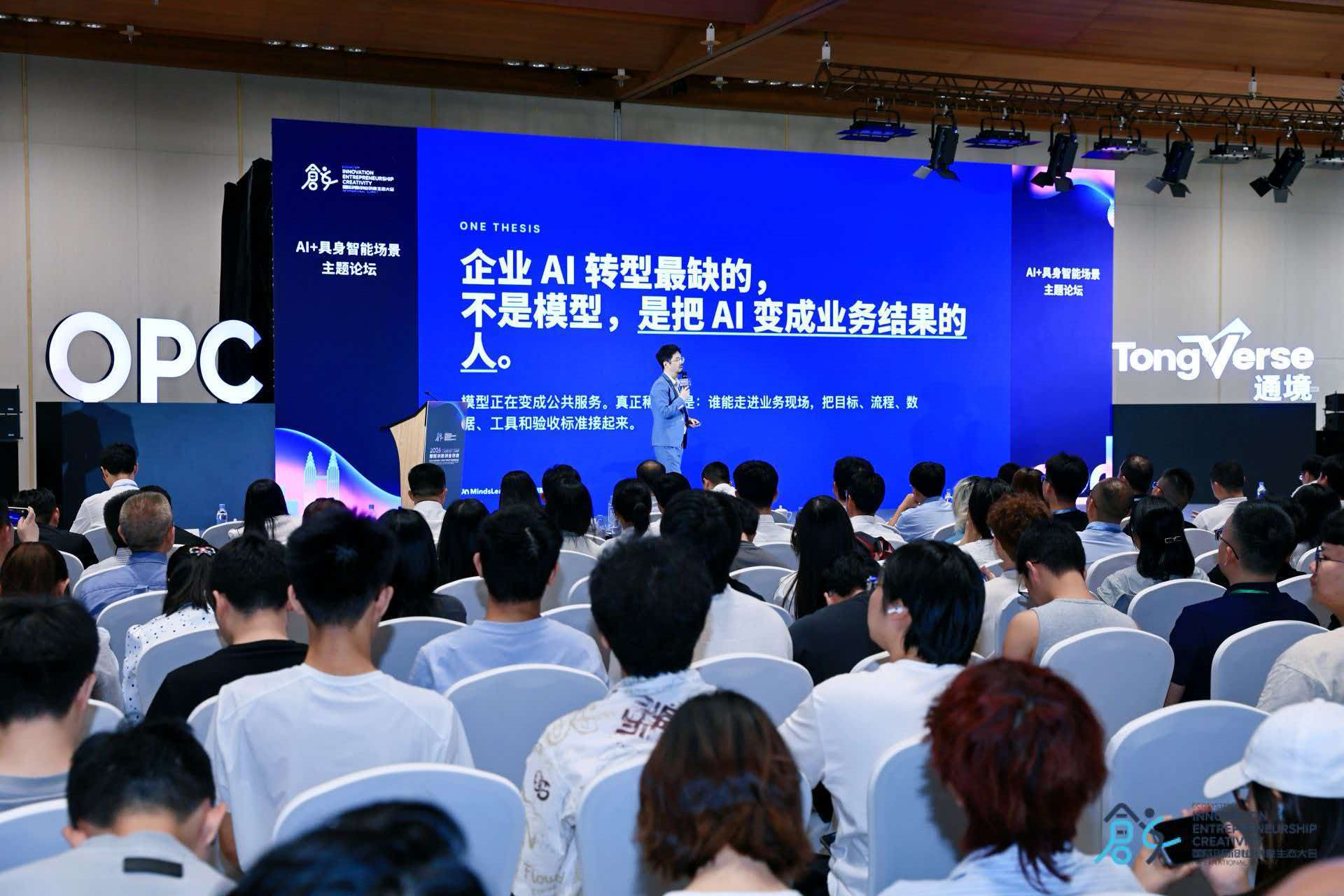
Models, agents, AI coding, and automation workflows are becoming more accessible to every company. What creates real differentiation is the ability to enter the business front line, connect goals, processes, data, tools, permissions, and acceptance criteria, and turn AI from a demo into a workflow that can run, be reviewed, and improve over time.
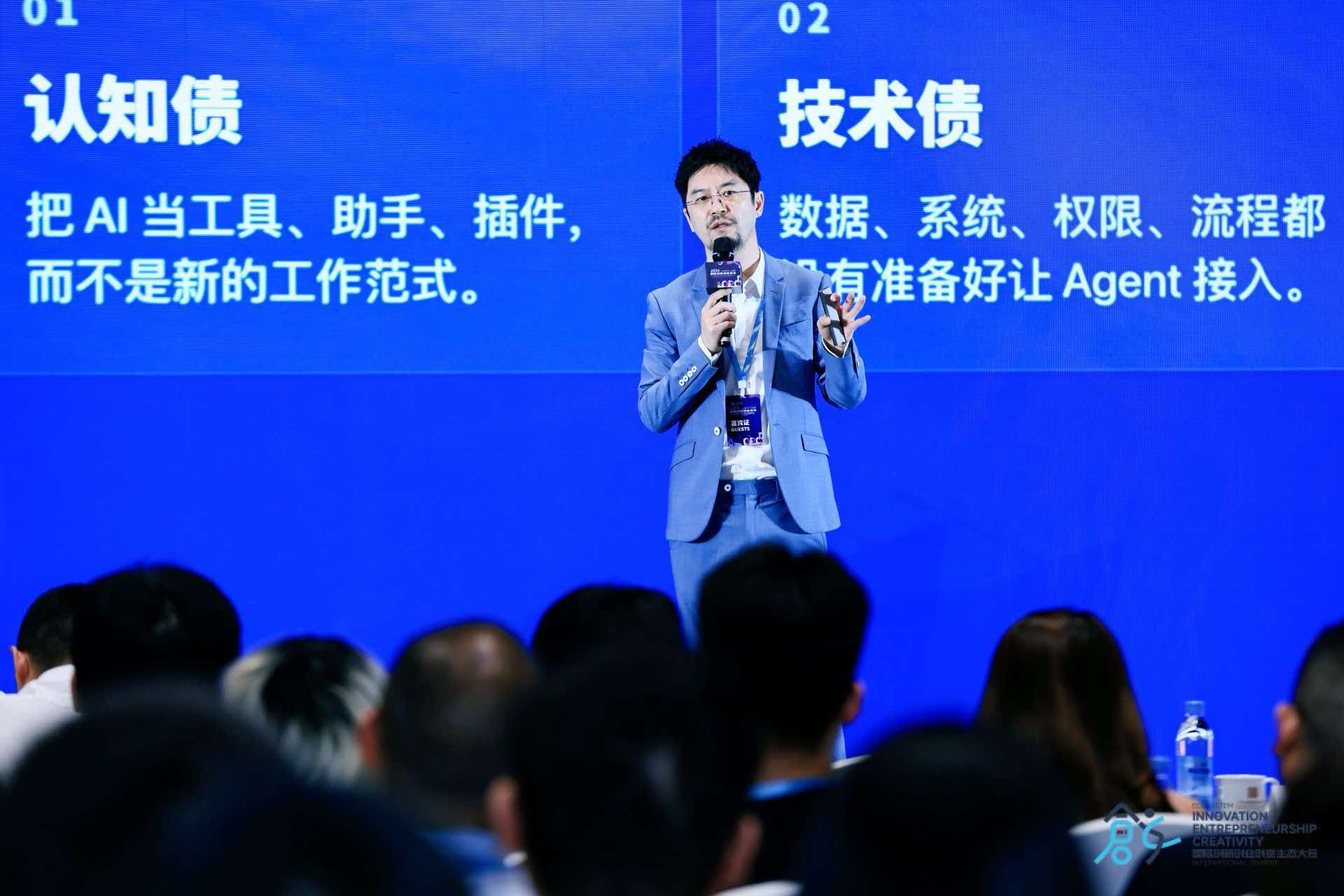
Lincoln summarized the common blockers in traditional enterprise AI transformation as three forms of debt:
- Cognitive debt: treating AI as a tool, assistant, or plugin rather than a new work paradigm
- Technical debt: data, systems, permissions, and workflows are not ready for agents to connect
- Organizational debt: decisions, approvals, and role boundaries are still designed around human IO speed
If these debts remain invisible, companies may buy tools and run training programs, but still remain at the stage where individuals use AI. They will struggle to move into the stage where the organization designs AI workflows.
FDE: a new front-line role for the AI era
Lincoln highlighted the role of FDE, or Forward Deployed Engineer, as a key answer to the question of who can turn AI into business results.
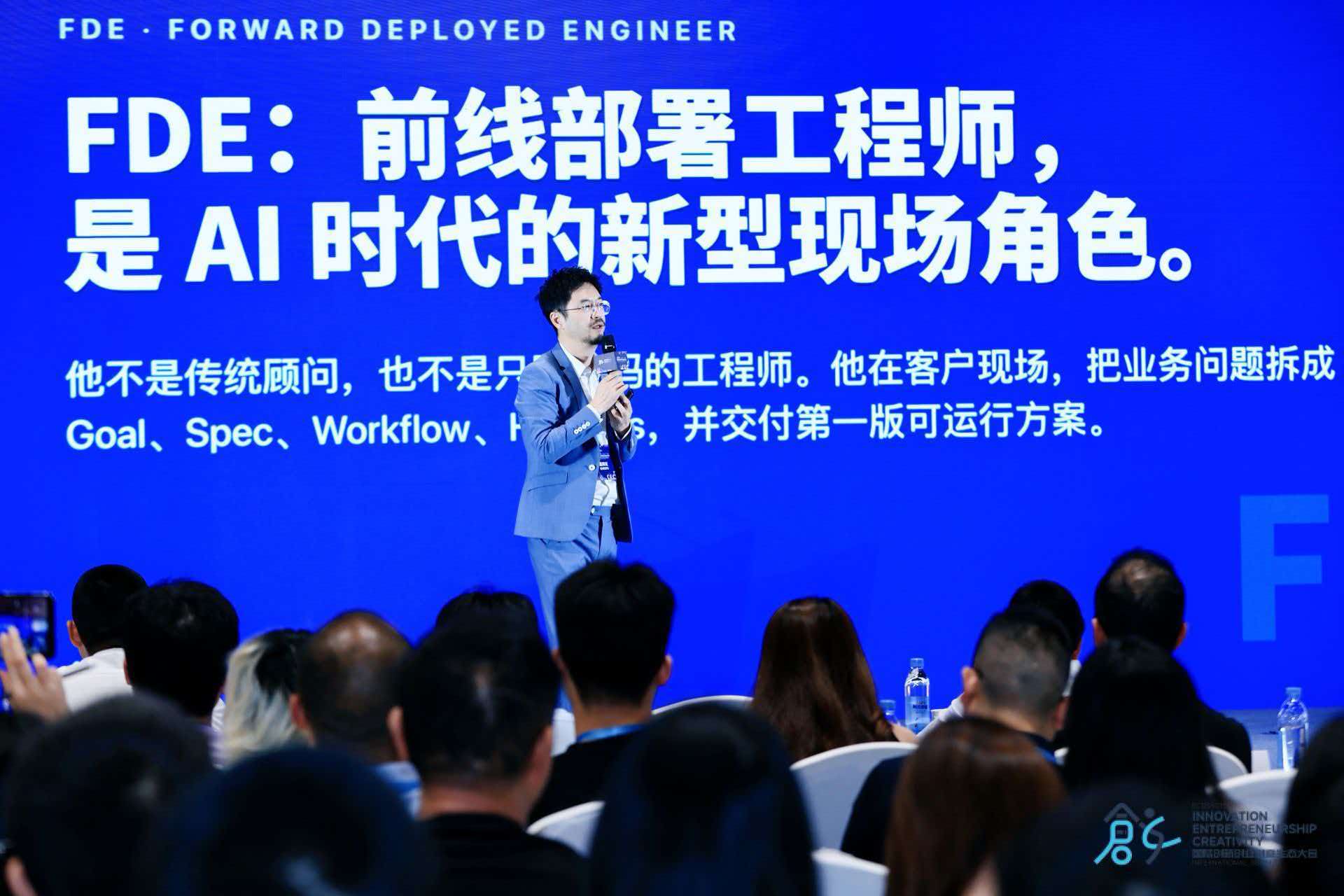
An FDE is not a traditional consultant, nor simply an engineer who writes code. It is a new front-line role in the AI era. The FDE works inside the customer's business context, breaks a business problem into Goal, Spec, Workflow, and Harness, and delivers the first runnable version of a solution.
In real enterprise contexts, founders rarely begin by asking for an "agent." They are more likely to say: "We need to launch this campaign quickly," "Our lead follow-up is too slow," "Customer service replies are inconsistent," or "Content production cannot keep up with channels." The value of FDE is to translate those vague business goals into systems that AI can execute, review, and improve.
Lincoln used marketing as an example. A campaign is not only a piece of copy. It includes market research, content planning, landing pages, creative assets, channel publishing, lead capture, and performance review. AI can take over many high-frequency execution steps, but humans must first define the goal, boundary, workflow, and acceptance criteria.
In other words, FDE is not about knowing how to use AI. It is about deploying AI into the front line.
OPC opportunity: connecting super individuals with super organizations
Another keyword at the conference was OPC, or one person company. Lincoln believes the opportunity for OPC builders comes from a generational advantage: they are closer to AI-native ways of working.
Tools such as Codex, Claude, agents, automation workflows, and content production systems may still look like "management software" or "innovation tools" to many traditional companies. For OPC builders, they are already everyday productivity.
But Lincoln also warned that the real opportunity is not in demos. It is in the customer site.
Super individuals now have access to technology. Super organizations still own data, scenarios, workflows, industry knowledge, and organizational memory. The opportunity for OPC builders is to connect the two: use the technical capability of a super individual to enter real enterprise scenarios and deploy AI into actual workflows.
Lincoln summarized two possible growth paths for OPC builders:
Path A: become an FDE.
Help companies connect AI to real business and deliver a runnable workflow on site. This process solves a customer problem while helping the OPC builder gain industry understanding, business trust, and real data.
Path B: become an AI-native company.
From repeated FDE projects, accumulate industry insight, extract high-frequency problems, recurring actions, decision rules, and data structures, and eventually productize a workflow that has already been proven in the field.
In short, the best AI products often do not begin as abstract app ideas. They emerge from repeated delivery in real customer environments.
Start from one real business problem
At the end of the talk, Lincoln gave OPC builders a simple but important suggestion:
Do not start from a startup idea. Start from one real enterprise problem.
He suggested choosing a specific industry such as manufacturing, education, cross-border commerce, e-commerce, consulting, or cultural tourism. Then find a real business owner who can provide a process that is painful, costly, and labor-intensive. Within one week, deliver the first version of an AI workflow that can be demonstrated, run, and reviewed.
The capabilities OPC builders need to build are not more tools, but three forms of delivery capability:
- Trust building: customers are willing to share real problems, real data, and real processes
- Requirement capture and expression: vague business goals can be written into specs that agents can execute and that humans can review
- Taste and judgment: AI handles high-concurrency execution, while humans judge what is right and worth delivering
This aligns with MindsLeap's long-term approach to enterprise AI transformation. AI is not a single tool. It is a new organizational capability. Companies need digital employees, and they also need people who can bring those digital employees into real business contexts. OPC builders need AI tools, but they also need real customers, real workflows, and real delivery.
Lincoln closed with one sentence:
The future is not only invented. It also needs to be deployed into the field.
For OPC builders, the opportunity is not simply to learn AI. It is to become the person who brings AI into real companies, real workflows, and real outcomes.
Sources
- People's Daily Online Chongqing: International Innovation, Entrepreneurship and Creativity Ecosystem Conference opens in Chongqing
- MindsLeap public keynote deck: Enterprise AI Transformation and OPC Opportunities
About MindsLeap
MindsLeap is an enterprise AI transformation and AI-native startup acceleration platform. Through the MindsLeap Founders AI Club, AI training and strategic advisory, FDE implementation, startup acceleration, and global growth services, MindsLeap helps traditional enterprises embed AI into real business workflows and helps AI-native ventures connect with industry use cases and global markets. MindsLeap is a global partner of Founders Space.
This article was translated and adapted from the Chinese original with AI assistance.