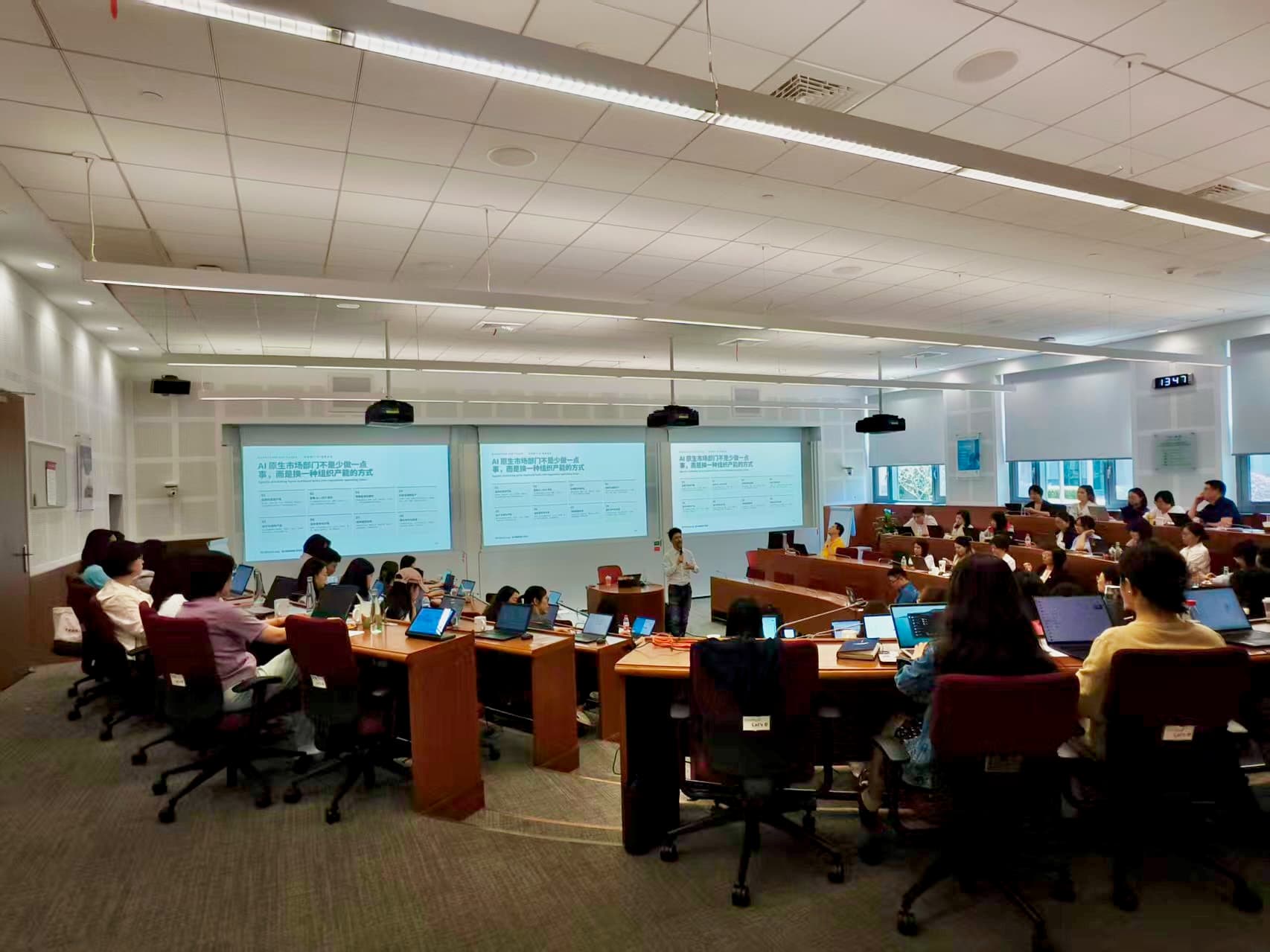
June 10, 2026 | Shanghai · China Europe International Business School
On June 10, 2026, MindsLeap delivered an AI Agent workflow training program for the marketing team at China Europe International Business School (CEIBS, 中欧国际工商学院). The program combined a half-day methodology briefing with hands-on work, helping participants move beyond a general understanding of generative AI and begin designing workflows around real marketing responsibilities.
The training addressed a practical question: once a marketing team has started using large language models, how can it move beyond repeated prompting and turn individual know-how into reusable team practice?
From Prompt Experiments to Reusable Workflows
A single prompt can complete a task, but ongoing marketing work requires consistent brand language, evidence boundaries, delivery formats, and review routines. The training therefore started with task design rather than a list of tools: define the business objective, source material, execution steps, output requirements, and human checkpoints.
MindsLeap organized the method around four connected elements:
- Spec defines the objective, inputs, outputs, constraints, and acceptance criteria
- Skill captures a repeatable method for a category of tasks
- Workflow connects steps, tools, and human judgment into an operating sequence
- Memory gives an Agent access to brand materials, prior content, and team rules
Together, these elements allow an AI Agent workflow to become a maintainable team asset rather than an isolated personal technique.
Four Real Marketing Scenarios
The workshop focused on four verified scenarios from marketing operations: brand content memory, website AI and GEO, market monitoring, and content and video production. Participants used real tasks and materials to define Agent responsibilities, context, and output requirements.
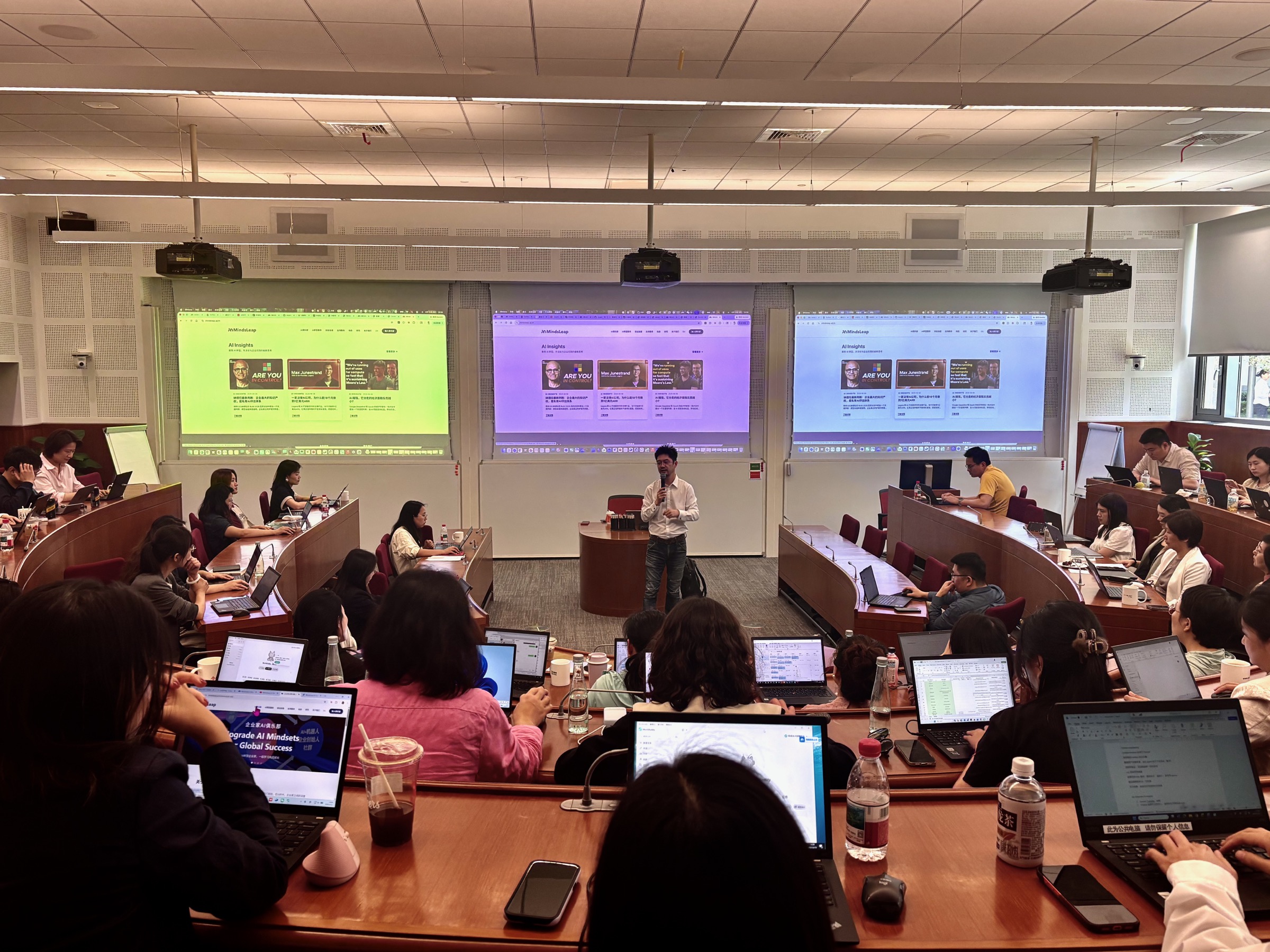
For brand memory, the team examined how brand documents, existing articles, event information, and editorial rules can become searchable long-term context. The website AI and GEO scenario focused on making official information easier for search engines and AI systems to understand and cite. Market monitoring covered source selection, filters, and reporting structure. Content and video production connected research, drafting, review, and channel adaptation.
These scenarios show that introducing AI into a marketing department is not simply adding another generation tool. It requires redesigning how information enters the team, where judgment happens, and how outputs are reviewed and reused.
How Spec, Skill, Workflow, and Memory Work Together
During the hands-on session, participants first clarified the Spec, then converted repeatable steps into a Skill and used a Workflow to connect research, drafting, fact-checking, and human approval. Memory provided the brand background and historical context needed across the process.
A market-monitoring Agent, for example, needs more than an instruction to find recent industry news. It needs a defined scope, trusted sources, exclusion rules, classification logic, reporting cadence, and escalation criteria. A content Agent must understand not only how to write clearly, but also the brand position, acceptable evidence, restricted claims, and destination channel.
From Personal Productivity to a Team Operating System
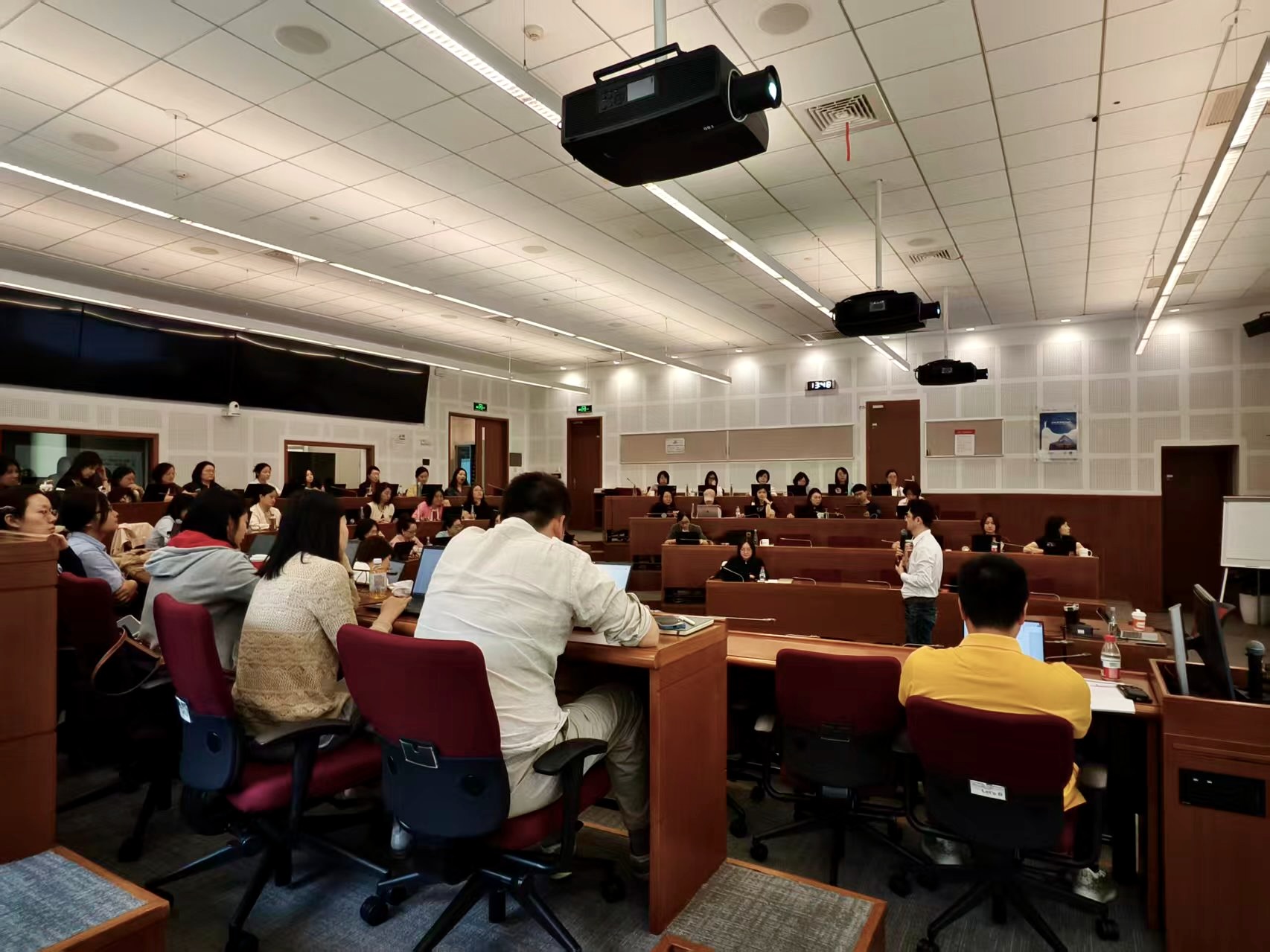
One important shift during the training was from asking who could write the best prompt to asking how a team could maintain a shared way of working. Personal prompts often remain inside chat histories. Structured Specs, Skills, Workflows, and Memory can instead be reviewed, reused, and improved by the team.
This structure also clarifies accountability. AI can support research, first drafts, formatting, and repeatable execution, while people remain responsible for objectives, factual validation, brand judgment, and final publication. The workflow does not remove human judgment; it places that judgment where it matters most.
What the Training Produced
Through the briefing and hands-on work, participants developed workflow drafts, task templates, and checklists for their scenarios. These were not presented as finished universal solutions. They provide a practical starting point for further testing, revision, and organizational learning.
MindsLeap's AI training services start with real business tasks so that managers and teams can understand the method and build an initial workflow. Organizations that need to connect these workflows with operating processes, data, and systems can continue through MindsLeap's enterprise AI transformation services.
Frequently Asked Questions
Was this a tool tutorial or workflow training?
The core focus was workflow training. Tools supported the exercises, while the method centered on defining a Spec, capturing a Skill, orchestrating a Workflow, and supplying stable context through Memory.
Why does a marketing team need brand Memory?
General-purpose models do not know a company's content history, editorial rules, or evidence boundaries. Brand Memory gives different Agents a more consistent source of context.
Can an AI Agent workflow publish content automatically?
That depends on the risk of the task and the organization's governance rules. External content should normally retain human checkpoints for fact-checking, brand review, and final approval.
How does MindsLeap design enterprise AI training?
Programs typically begin with real team scenarios and combine methodology, hands-on building, output review, and iteration so that AI understanding becomes a reusable workflow asset.
About MindsLeap
MindsLeap is an enterprise AI transformation and AI-native startup acceleration platform. Through the MindsLeap Founders AI Club, AI training and strategic advisory, FDE implementation, startup acceleration, and global growth services, MindsLeap helps traditional enterprises embed AI into real business workflows and helps AI-native ventures connect with industry use cases and global markets. MindsLeap is a global partner of Founders Space.
This article was translated and adapted from the Chinese original with AI assistance.